

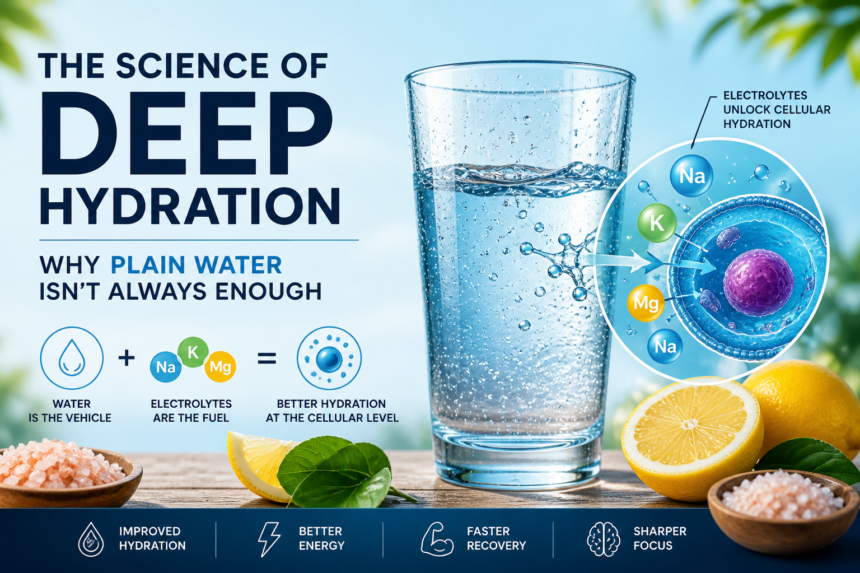
The Science of Deep Hydration: Why Plain Water Isn’t Always Enough In the peak of a grueling summer or during an intense day of activity, most people reach for a bottle of plain water to quench their thirst. However, a growing body of health research suggests that drinking water alone may not be sufficient for true cellular hydration. While water provides the volume, it is the presence of electrolytes—minerals like sodium, potassium, and magnesium—that determines whether that water actually reaches your cells or simply passes through your system. The human body operates on a delicate electrical balance. Every muscle contraction, heartbeat, and nerve impulse relies on electrolytes to carry electrical charges across cell membranes. When we sweat, we lose more than just liquid; we lose these vital salts. If we replace that loss with only plain, distilled, or purified water, we risk a “dilution effect.” In extreme cases, this leads to hyponatremia, where the sodium levels in the blood become dangerously low, causing fatigue, headaches, and confusion. To understand why this happens, one must look at the mechanism of cellular absorption. Water follows minerals. Specifically, sodium acts as a key that unlocks the door to your cells, pulling water in with it. Without these mineral “keys,” water stays in the bloodstream and is eventually filtered out by the kidneys as waste, leaving the tissues still thirsty. This is often why you might feel bloated or “sloshy” after drinking a liter of water but still feel a lingering thirst or a mild brain fog. For the average person sitting in a climate-controlled office, plain water and a balanced diet are usually adequate. However, for those living in high-temperature regions, active individuals, or those engaged in high-stress outdoor work, the hydration strategy must change. Incorporating natural electrolytes into your routine can bridge this gap. Traditional solutions, such as fresh lemon water with a pinch of rock salt or the consumption of potassium-rich fruits, provide a more efficient hydration profile than many processed alternatives. Ultimately, the goal of hydration is not just to drink, but to retain and utilize. By ensuring your water intake is paired with essential minerals, you support your body’s internal electrical grid, improve recovery times, and maintain the mental clarity required for a demanding day. Water is the vehicle, but electrolytes are the fuel that makes the journey possible.
The Science of Deep Hydration: Why Water Alone Isn’t Enough