


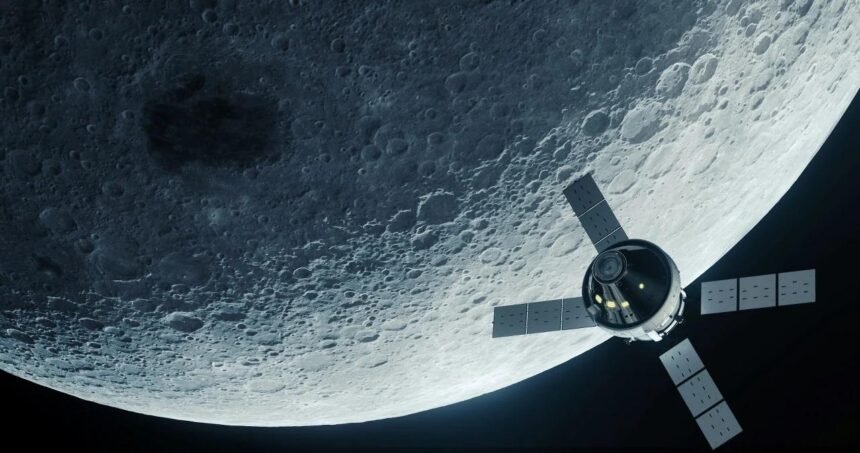
June 2026: The Moon has once again become the focus of global scientific attention as space agencies and private companies accelerate plans for lunar exploration. Scientists believe that studying the Moon could provide valuable insights into the origins of the solar system, support future deep-space missions, and even pave the way for long-term human presence beyond Earth.
Recent advances in spacecraft technology, robotics, and artificial intelligence have made lunar missions more ambitious than ever before. Researchers are using sophisticated instruments to analyze the Moon’s surface, investigate its geological history, and search for resources such as water ice that could support future exploration efforts.
One of the key scientific goals is understanding how the Moon formed and evolved over billions of years. Lunar rocks and soil contain important clues about the early history of Earth and the solar system. Scientists hope that future sample-return missions and advanced lunar laboratories will help answer long-standing questions about planetary evolution.
The discovery of water ice in permanently shadowed regions near the lunar poles has generated particular excitement within the scientific community. Experts believe these deposits could potentially be used for drinking water, oxygen production, and even rocket fuel, making future lunar settlements more feasible.
International cooperation is also playing an increasingly important role in space exploration. Multiple countries are investing in lunar research programs, sharing scientific knowledge, and developing technologies that could support future missions to Mars and beyond.
Space scientists view the Moon as a critical stepping stone for humanity’s next era of exploration. As research continues and new missions are launched, discoveries made on the lunar surface may contribute to advancements in science, engineering, and our understanding of the universe.